CHAPTER 1
INTRODUCTION TO THE UNVIERSITY
The University of Peradeniya is the heir to an eighty year old university tradition which commenced with the inception of the University of
Ceylon, the first institution of its kind established in Colombo on 1st July 1942. It moved to the salubrious environment at Peradeniya in
1952. The Universities Act No. 16 of 1978 came into effect on 1st January 1979, granting a new identity to this institution as ‘University of
Peradeniya’. The University of Peradeniya is the largest and a state owned comprehensive university with a vibrant university culture. The University of Peradeniya being the prime seat of higher learning in the country has been ranked as the number one university in the country (2020).
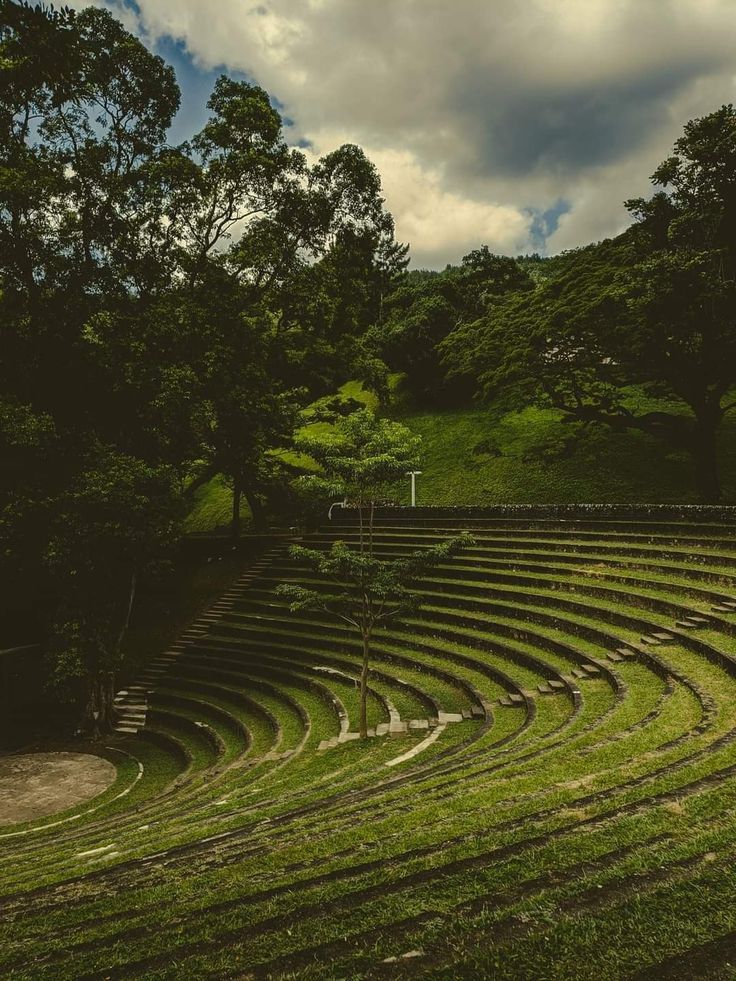
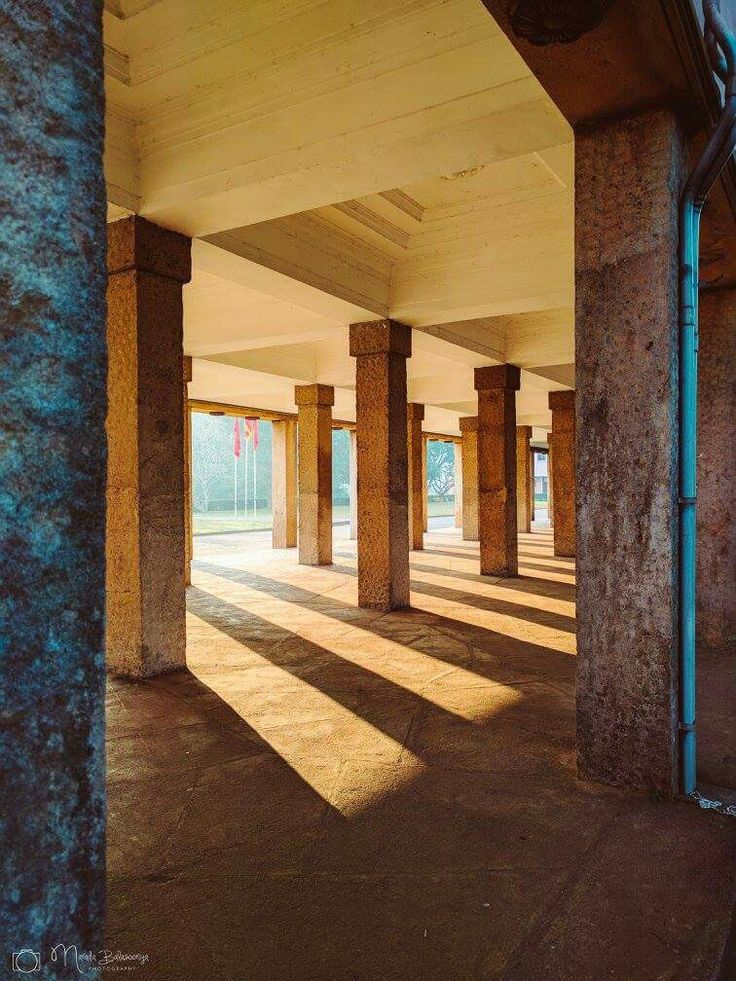
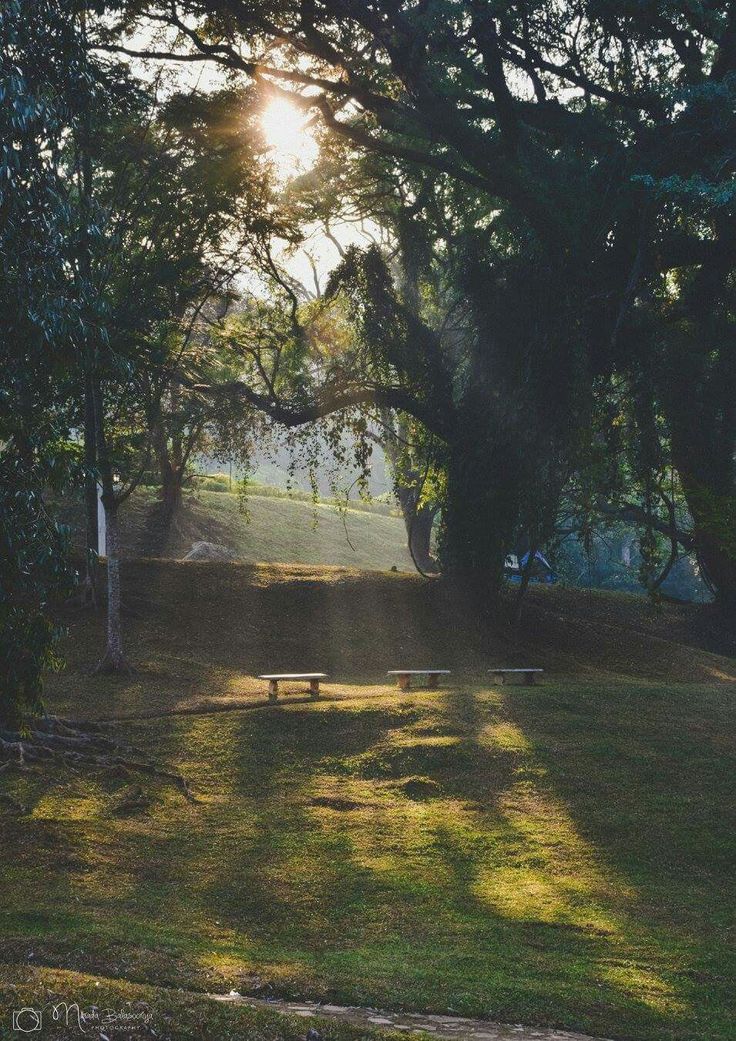
The University covers nearly 780 hectares of land, and the developed area covering approximately 130 hectares is occupied by the administrative & academic buildings and other facilities. The University of Peradeniya is famous for its lush greenery. Most trees begin to bear flowers around March, signaling the dawn of spring. The unique combination of the rich foliage and the built environment gives the place a rare aesthetic beauty, earning Peradeniya the title, ‘the garden university of Sri Lanka’. A breath-taking view of the university premises could be experienced from the Upper Hantana Road and numerous hiking trails along the Hantana range.
The University currently comprises of nine academic faculties and three postgraduate institutes, serving for over 12,500 full-time undergraduates and around 8,500 postgraduate students at a given point of time. Fourth Postgraduate Institute is being established for medical sciences. The University has a well-equipped library network system to support teaching, learning and research, with a central library and seven satellite libraries, with over 850,000 books, and access to journals and other educational resources.
The University of Peradeniya was originally planned as a fully-fledged residential university with hostels for all undergraduates and housing for all employees. The increase in the number of the students and staff has made some limitations on providing residential facilities to all.
A whole range of sports and recreation facilities is available for the staff and students. The University has a well-equipped gymnasium, a swimming pool, playing fields and grounds facilitating track and field events. There is also a Faculty Sports and Recreation Centre dedicated to the staff.
The services to the university community are provided by several service units and divisions. Social interaction and well-being are considered as integral parts of the educational process at Peradeniya. Numerous social, cultural, religious, sports and recreational activities provide a platform for students and staff from various disciplines and backgrounds to interact with each other, irrespective of their religious, ethnic, linguistic or social barriers, creating unity, togetherness and brotherhood.
The proclamation establishing the University of Ceylon was issued on 9th June 1942 and Dr. Jennings University Calendar undertook the enormous task of establishing the university by amalgamating the Ceylon University 2018/19 College and the Medical College into a single unit. A unitary, residential and autonomous university was established on 1st July 1942.
The university established in 1942 has changed its identity several times as stated below due to changes of its location and subsequent legislation:
University of Ceylon 1942 - 1952
University of Ceylon, Peradeniya 1952 - 1972
University of Sri Lanka, Peradeniya Campus 1972 - 1978
University of Peradeniya 1979 date
1946 Commencement of constructing the university buildings at Peradeniya. University Calendar
2018/19
Two consultants, Sir Patrick Abercrombie and Mr. Clifford Holliday, did the planning and layout of the university complex while Mr. Shirley De Alwis attached to the Public Works Department assisted in designing work. The first phase of the project was to be entirely on the right bank of the river Mahaweli and the construction work was entrusted to the Public Works Department. The second phase was the building of a bridge across the river Mahaweli and the development of its left bank. 1952 The first batch of students moved from Colombo to Peradeniya. These were students from the
Departments of Law and Agriculture and the third and fourth year students of the Department of Veterinary Science, which was at that time attached to the Faculty of Medicine, Colombo. The major move took place in 1952 when the staff and students of the Faculty of Arts and Oriental
Studies, together with the Main Library and the University Administration, were transferred to Peradeniya. The completion of this major move on 6th October 1952 marked the formal establishment of the University of Ceylon, Peradeniya.
This important event of the university becoming fully operative at Peradeniya was celebrated in a subdued fashion with the Vice-Chancellor planting a tree opposite the entrance to the Lodge, as the government was keen to postpone the ceremonial opening arranged for 1952, owing to the death of King George VI and until Queen Elizabeth II could participate in the opening ceremony.
Sir Andrew Caldecott (1942-1944)
Sir Henry Monk-Mason Moore (1944-1949)
Lord Soulbury (1949-1954)
Sir Ivor Jennings (1942-1955)
1954 Opening ceremony of University of Ceylon at Peradeniya was held with the participation of University Calendar Queen Elizabeth II and the Duke of Edinburgh, who while declaring open the university stated that 2018/19
“You have remarked Mr. Chancellor, that it is not easy to open a university, because once
established it is always open. However, like the shopkeepers of London during the bombing, I can
declare this place to be “more open than usual....”
1962 Owing to the increased demand for university education, over 1000 students admitted to the Faculty of Arts, University of Ceylon, Peradeniya, and 692 were admitted as external students.
Several structural changes were introduced. The University Courts were abolished and the Councils were replaced by Boards of Regents. A National Council for Higher Education (NCHE) was set up in Colombo to supervise and regulate the universities. Under the new Act, the Vice-Chancellors would be selected rather than elected.
Lord Soulbury
(1949-1954)
Sir Oliver Goonetilleke
(1954-1962)
Mr. William Gopallawa
Vice-Chancellors
(1962-1978)
Sir Ivor Jennings
(1942-1955)
Sir Nicholas Attygalle
(1955-1966)
Mr. S.J. Walpita
(1966-1968)
Mr. M.J. Perera
(1968-1969)
Prof. E.O.E. Pereira
Registrars
(1969-1971)
Mr. H B Balmord
(1952-1956)
Mr. W A Jayawardhane
(1956-1966)
Mr. D.S Abeysinghe
(1970-1976)
1972 The new orders were spelt out in the University Act No.1 of 1972 by which four universities -
Peradeniya, Colombo, Vidyodaya and Vidyalankara and the Ceylon College of Technology, University Calendar
Katubedda, Moratuwa became five constituent campuses of a single university - the University of 2018/19
Sri Lanka having a central administration in Colombo.
The Heads of campuses were designated as Campus Presidents and the Minister of Education appointed the Vice-Chancellor of the single University of Sri Lanka. Under this system of centralized control, the NCHE was abolished, the Boards of Regents were abolished, and the Senates of the Campuses were given diminished roles as advisory bodies.
This radical change brought about a further change in the identity of the University of Ceylon, Peradeniya, which now became University of Sri Lanka, Peradeniya Campus.
Many changes were also introduced under a process of “rationalization” that affected institutions as well as individuals. The academic regrouping involved the closure (or transfer) of certain departments, merger of faculties, and the transfer of personnel to new “centres of excellence”.
1977 A new government came into power in Sri Lanka, an obvious and unavoidable task in their hands was to draw up new legislation to replace the University Act No.1 of 1972, which could not be implemented in full for over 5 years.
Mr. William Gopallawa (1962-1978)
Mr. J.R. Jayawardene (1978-July 1979)
Prof. B.L. Panditharatne
(1978-84)
Prof. B.A. Abeywickrema University of Sri Lanka
Mr. L.H. Sumanadasa (1972-1978)
Prof. P.P.G.L. Siriwardena
Mr. D.S Abeysinghe (1970-1979)
1979 The Universities Act No.16 of 1978 based on the new Universities Bill came into effect on 1st University Calendar
January 1979. This Act brought back some of the central features of the Ceylon University 2018/19
Ordinance of 1942 with a difference: the powers of the Senates were restored, the Councils and Courts were re-established and elections for the posts of Vice-Chancellor re-introduced. The independence of the universities was restored but the creation of a University Grants Commission (UGC) with centered powers than those traditionally associated with such bodies, brought in a new measure of control over the finances, student admissions, and scheme of recruitment and promotions in universities.
The most significant change that the Universities Act No.16 of 1978 brought to Peradeniya was the restoration of the university's autonomy under the new identity “University of Peradeniya”.
Mr. J.R. Jayawardene (1978-July 1979)
Mr. Victor Tennekoon
(July 1979 – Jan 1984)
Mr. T.B. Panabokke
(Feb. 1984 - 1989)
Mr. Frederick E. De Silva
(1990 - 1993)
Prof. E.R. Sarachchandra
(1993 to 1996)
Prof. R.G. Panabokke
(1999 to 2002)
Deshamanya R.K.W. Gunesekera
(2002 to 2006)
Dr. Premadasa Udugama
(Feb 2007 to Jan 2012)
Prof. P.W. Epasinghe
(Feb 2012 to Jan 2017)
Prof. K.M. De Silva
(May 2017 to date)
Prof. B.L. Panditharatne
(1978-1984)
Prof. M.A. Fernando
(1984-1985)
Prof. R.G. Panabokke
(1985-1988)
Prof. A.P.R. Aluwihare
(1988-1989)
Prof. C.L.V. Jayatilleke
(1989-1991)
Prof. J.M. Gunadasa
(1991-1994)
Prof. C.M. Madduma Bandara (1994-1997)
Prof. R.A.L.H. Gunawardana
(1997-2000)
Prof. K.G.A. Goonasekara
(2000 to July 2006)
Prof. H. Abeygunawardena
(Aug. 2006 to July 2009)
Prof. S.B.S. Abayakoon
(Aug. 2009 to July 2012)
Prof. A. Senaratne
(Aug. 2012 to July 2015)
Prof. U.B. Dissanayake
Registrars
(Aug. 2015 to date)
Mr. W B Adhikaram
(1979-1983)
Mr. C G Abeyakoon
(1984-1993)
Mr. Wimal Dissanayake
(1993-1998)
Mr. W H Sumanasiri
(2000-2004)
Mr. T.M.D.R. De Alwis
(March 2006-Jan. 2009)
Mr. UD Dodanwala (Actg.)
(Sept. 2008- June 2012)
Dr. M.N. Jayawardena (June 2012- July 2014)
Mr. P.H. Ariyaratna (July 2014-Aug. 2015)
Mr. UD Dodanwala (Actg.) (Sept. 2015-Nov. 2016)
Mr. U.D.Dodanwala (Nov. 2016-April 2018)
Mr. R.V.S.P. Rajapaksha (Actg.) (June 2018 to 23 Oct. 2020)
Mr. R.V.S.P. Rajapaksha (24 Oct. 2020 to date)
There were only 55 staff members in all four Faculties (consisted of 41 academic departments) including 15 Professors, 20 Lecturers, 8 Assistant Lecturers and 12 others. There were 904 students distributed among four Faculties: Arts and Oriental Studies (396), Science (250), and Medicine (268).
1947 In pursuance of the policy of the government for the university to function in Colombo until the buildings at Peradeniya were made ready for occupation.
1947 The first batch of students from the Departments of Law and Agriculture came into residence at Peradeniya.
1952 The formal establishment of the University of Ceylon at Peradeniya
The staff and students of the Faculties of Arts and Oriental Studies, together with the Main Library and the University Administration, were transferred from Colombo to Peradeniya.
This period also saw the establishment of the University of Peradeniya Library, which originated as the Ceylon University College Library in 1921. This College Library became the University of Ceylon Library in 1942 and was moved to the Ground Floor of the Arts Block, Peradeniya, in October 1952.
1954 The Faculty of Agriculture and Veterinary Science was established at Peradeniya.
The transfer of the Department of Dental Surgery to Peradeniya also took place.
The Faculty of Science at Peradeniya (the second Faculty of Science in the University system) was started at the commencement of the university session of 1961/62 with five departments of study. The first batch of students comprised of 40 biological science students and 76 physical science students.
1962 The Dental School became a part of the Faculty of Medicine, Peradeniya.
1964 The Faculty of Engineering was transferred to Peradeniya in October.
University Calendar
2018/19
Refer Chapter 11 for details
academic staff had to move to other universities while certain departments such as Western Classics, English and Education, too, were moved to other campuses.
The Faculties of Arts and Oriental Studies, which are among the oldest in the University, underwent a major overhaul during the “rationalization” process that followed the University of Act No. 1 of 1972.
Eight of the seventeen Departments of study including Pali, Sanskrit, Western Classics and Education were closed down, and the two faculties merged into a single Faculty – the Faculty of Arts.
1978 A part of the Faculty of Arts was relocated at a new University Campus at Polgolla. By 1978, the student enrolment of the Faculty of Arts alone was 2500.
Under the Universities Act No. 16, 1978, the university not only regained its independence but also some University Calendar academic departments that it had lost at the beginning of the decade was re-introduced. Since then, the 2018/19 university has shown steady development in number of undergraduate and postgraduate degree
programmes, student enrollments and number of academic department and faculties.
By separation of Dental and Veterinary Schools from the Medical Faculty, the Faculty of Veterinary
Medicine and Animal Sciences was established in 1980 and the Faculty of Dental Sciences in 1986.
1996 The Postgraduate Institute of Science (PGIS) was established as a national institute under an act of
Parliament under Section 24A of the Universities Act. No. 16 of 1978.
2007 The Faculty of Allied Health Sciences was established
2019 The Postgraduate Institute of Medical Sciences (PGIMS) was established as a national institute under an act of Parliament under Section 24A of the Universities Act. No. 16 of 1978.
The key academic developments that have taken place in each Faculty since 1979 are given below in a sequential order.
University Calendar
1983 Two new Departments of Study, namely, Department of Food Science and Technology and 2018/19 Department of Soil Science were created in place of the Department of Agricultural Chemistry
1991 The Faculty of Agriculture (FA) pioneered the introduction of the course-unit-based education system and moved into a trimester-based education
1991 The FA introduced Annual Staff Research Sessions
1993 The Department of Animal Science of the FA introduced Annual Student Research Sessions.
1996 Two new departments of study, namely Department of Agricultural Economics and Department of Agricultural Extension were established in place of the Department of Agricultural Economics and Extension
1998 The FA became the first Faculty in the Sri Lankan Universities to move into semester-based education
1998 The FA established the Agribusiness Centre (AbC) as its first outreach centre in order to strengthen Faculty-industry interactions
2012 The FA received Rs. 25 million from the World Bank through a competitive grant scheme to improve Higher Education in the Twenty First Century (HETC) focusing on the B.Sc. degree in Food Science and Technology
2014 The FA introduced Faculty of Agriculture Undergraduate Research Symposium (FAuRS) as an annual event in the Faculty calendar to provide a common platform for the graduands from all Departments of Study to communicate the results of their final year research projects
2018 The FA established a Community Development Unit at the Mahailluppallama Sub Campus as its fourth outreach arm
2018 The FA celebrated 70 years of higher education in agriculture in grand style by holding AgTech-
2018 exhibition at the Mahailluppallama Sub Campus which also celebrated its 50th Anniversary
2018 The FA received Rs.100 million from the World Bank through a competitive grant scheme under Accelerating Higher Education Expansion and Development (AHEAD) project. The Faculty proposal was the first among the science-based faculties of tier one Universities of Sri Lanka.
2018 The FA started teacher evaluation by peers.
2018 The FA partnered with the National Institute of Language Education and Training (NILET) to offer Sinhala language for Tamil students and Tamil language for Sinhala students.
The FA implemented recognition of staff research by Annual Research Excellence Award through Faculty Research Committee under three categories (Professors, Senior Lecturers and Probationary Lecturers).
2007 The Faculty of Allied Health Sciences (FAHS) was established as the 8th Faculty of the University of Peradeniya to offer degree Programmes for Nursing and Paramedical sciences
2007 The FAHS commenced offering four-year undergraduate honours degree programmes in Nursing, Physiotherapy, Medical Laboratory Science, Pharmacy, Radiography and Radiotherapy
2012 The very first batch of FAHS students graduated at the convocation held in April 2012
2017 The FAHS celebrated its 10th year anniversary with the opening of a new building complex to house the administrative block, two laboratories and an auditorium
2018 Faculty Quality Assurance Cell was established
2018 University Rajya Osusala was established as a joint venture between State Pharmaceutical Corporation and the Department of Pharmacy
2019 Programme Review of Physiotherapy degree was completed successfully
1988 The Dumbara campus was integrated to the Faculty of Arts to augment the staff strength of the Faculty of Arts
2001 The course unit-based curriculum was adopted by the Faculty of Arts
2001 The Departments of Fine Arts was established in the Faculty of Arts
2001 The Department of Management was established in the Faculty of Arts. The Department of Education moved to the new building
2007 Establishment of Special Needs Resource Unit
2006 A joint B.Sc degree Programme on Computation and Management was established in collaboration with the Faculty of Science
2009 The Department of Law was established at the Faculty of Arts
2019 Laid foundation for a seven storied building
2019 Established a Coordinating Unit of Internships, Volunteering and Community Outreach (CIVCO)
2019 Established the Needy Students’ Fund to support students with special economic needs
2021 Commencement of Bachelor of Science in Geographical Information Science (GIS) and Bachelor of Social Work (BSW) Degree Programmes
1980 The Dental School was departmentalized into 5 departments of study, namely, Department of Community Dental Health, Oral Medicine & Periodontology, Oral Pathology & Oral Surgery, Prosthetic Dentistry, and Restorative Dentistry.
1986 The Dental School received its Faculty Status.
1990 The Department of Oral Pathology and Oral Surgery became two independent departments, namely, Department of Oral Pathology and Department of Oral Surgery.
1995 The new Department of Basic Sciences was established.
2008 Establishment of the Faculty Library.
2013 Establishment of “The Center for Research in Oral Cancer” in collaboration with Yonsei University, Seoul, Korea.
2019 Ceremonially opened the new building for the Centre for Research in Oral Cancer (CROC).
2019 Establishment of the Smile Train Cleft Centre (STCC).
2019 Establishment of Comparative Human Biology and Natural Products Research Laboratories.
1985 The Computer Center was absorbed into the newly established Department of Computer Sciences.
1985 The Engineering Education Unit (EEU) was established in the Faculty of Engineering, primarily with the view of coordinating activities in the areas of Staff development, Curriculum development, provision of audio-visual facilities for educational purposes and freshmen orientation.
2001 The semester based course‐unit system was introduced and a batch of 312 students started their studies in the first year under the new system.
of Electrical and Electronic Engineering. The conference became an annual event of the department for the next 15 years.
2008 The intake was increased to 415 students per batch.
2008 A major curriculum revision was carried out in order to fine tune the system to cater to the increase in the number of students and requirements of the course unit system.
2008 The Faculty obtained the IESL accreditation certification for its well established degree programme.
2012 The SATREPS (The Science and Technology Research Partnership for Sustainable Development) Japanese research award for Solid Waste Management worth over US$4 million was awarded to the Department of Civil Engineering. This is the first ever research project sponsored under this scheme in Sri Lanka.
2015 The Faculty started to offer its 11 postgraduate degree programmes every year.
2019 The specialization on Production Engineering was renamed as Manufacturing & Industrial Engineering.
2016 Five diploma programmes in Accounting & Finance, Human Resource Management, Business Management, Marketing Management, and Project Management were introduced.
2018 The Faculty of Management was awarded Grade “A” for the Bachelor of Business Administration (Honors) Degree Program by the Quality Assurance Council of the University Grants Commission.
2019 Postgraduate Unit was established in January.
2019 The Faculty launched postgraduate programmes (Postgraduate Diploma in Accounting & Finance, Postgraduate Diploma in Management, MBA, M.Sc. in Accounting & Finance, M.Sc. in Management and Ph.D. under the Postgraduate Unit of the Faculty).
2019 The Faculty conducted the maiden International Research Conference on 14th November, 2019
2019 The Faculty established Teachers Welfare Association.
1980 Establishment of the Teaching Hospital, Peradeniya, with professorial units in Medicine, Surgery,
Obstetrics & Gynaecology, Paediatrics and Psychiatry. Commencement of Child Psychiatry, Mental Retardation and Sexual Medicine clinics
1987 Establishment of the Department of Anesthesiology
1990 The first ever immunohistochemistry facility was established at the Department of Pathology
1992 Establishment of the Nuclear Medicine Unit
2002 Establishment of the new pre-clinical building which houses the departments of Anatomy, Physiology and Biochemistry
2004 The system-based curriculum was introduced
2004 Establishments of the Skills Lab, Technical Resource Centre and e- Library
2006 The Medical Education Unit's Staff Development Programme received accreditation by the University Grants Commission
2008 Establishment of the Muscle Histochemistry Laboratory in the Department of Pathology
2012 Establishment of the Department of Radiology
2012 The Faculty celebrated its Golden Jubilee with an International Conference titled “Contribution to Science and Society”
2018 Inauguration of Summit and Student Room
1984 A Computer Unit was established.
1986 English Langauge Teaching Unit (ELTU) was established to assist the Sinhala and Tamil Media students.
1993 New Science Library was inaugurated
2006 The Faculty received Rs.24 million from the Quality Enhancement Fund of the World Bank funded IRQUE project of the Higher Education Ministry.
2008 Special Degrees in Biology and Statistics were introduced.
2013 The Science Education Resource Centre was established.
2019 The Department of Geology was shifted to the new building at the Faculty premises
2019 The Department of Statistics and Computer Science was shifted to the new building
2019 Proposals were submitted to establish a new Department of Environmental and Industrial Sciences
1980 The Faculty of Veterinary Medicine and Animal Sciences (FVMAS) was established as a fully independent unit with three departments of study: Veterinary Pre-clinical Studies, Veterinary Para- clinical Studies, and Veterinary Clinical Studies
1992 A major curriculum revision was conducted under the guidance of Lord Professor E.J.L. Soulsby of the University of Cambridge, UK
2007 Establishment of the Rabies Control Unit under the Department of Veterinary Pathobiology in collaboration with the Hokkaido University, Japan
2013 Received Rs. 10 million under the Higher Education for the Twenty First Century (HETC) Project, Quality and Innovation Grant (QIG) Window 4, Research Dissemination and Commercialization Project for a 2-year duration
(AHEAD), Innovations and Commercialization Enhancement (ICE) Project for a 3-year duration
1979 The Agriculture Education Development Project became a reality and provided long-term and short-term technical assistance to approximately 28 persons per year. 38 persons from the Faculty of Agriculture received Ph.D. training in various universities in the USA
1987 The PGIA constructed 15 houses during 1987 – 1991 for academic staff of the Faculty of Agriculture under a World Bank financed “Agricultural Research Project”
1987 The Computer unit was established
1989 An Annual Congress was initiated to disseminate research at the PGIA to the scientific community
1989 The British Council Overseas Development Agency (ODA) sponsored 48 M.Phil.Research Projects of PGIA students at the time of its termination in 1989 (1979 - 1989)
1996 The number of Boards of Study was increased up to 10 with the amendment to the PGIA Ordinance
and Ph.D. Degree Programmes with its own funds
2001 University Senate approved to award PG Diploma
2013 MIS of the PGIA was introduced under a HETC grant
2019 Revitalizing “Tropical Agriculture Research Journal” of PGIA -The first issue of the 31st volume was launched at the Inaugural Session of the 31st Annual Congress with a new outlook having the objective of making it a journal that maintains the highest scientific integrity. The journal is made
open for papers year around and will also be open for non-postgraduate research. The Tropical Agriculture Research Journal of PGIA is an indexed Journal in Directory of Open Access.
1996 Establishment of the Postgraduate Institute of Science (PGIS)
1996 Inception of the ten Boards of Study
1996 Transfer of all postgraduate programmes from the Faculty of Science to the PGIS
1996 Registration of the first batch of Ph.D students
1996 Inauguration of M.Sc. Programmes in Medical Physics and Gemology & Industrial Minerals
1998 Inauguration of M.Sc. Programmes in Industrial Mathematics, Science Education and Applied Statistics
2006 Establishment of the Young Researchers’ Forum
2006 Inauguration of Postgraduate Diploma Programmes in Science Education and Information Technology
2008 Inauguration of M.Sc. Programmes in Nanoscience & Nanotechnology and Biodiversity, Ecotourism & Environment Management
2012 Initiation of the International Symposium on Water Quality & Human Health
2012 Inauguration of M.Sc. Programme in Applied Epidemiology
2014 Implementation of the incentive scheme for research publications
2014 Initiation of PGIS Research Congress as an annual event
2016 Initiation of the annual publication “Postgraduate Research Highlights” at the PGIS-20th Anniversary Celebrations
2016 Inauguration of M.Sc. Programmes in Pharmaceutical Botany and Information Technology
2018 Inception of the 11th Board of Study in Biomedical Sciences
2020 Initiation of research projects in collaboration with the Industry
2020 Initiation of PGIS Research Grant Scheme
2013 Ordinance was passed by the Parliament for the establishment of the Postgraduate Institute of Humanities and Social Sciences in December 2013
2015 Appointment of the first Director of the Institute
2015 Establishment of Board of Management and Boards of Studies
2017 Development of Corporate plan and Action plan of the Institute
2018 Appointment of the Director for following three years
New by-laws of the Institute were approved by the Board of Management.
1.2.4.(m) Postgraduate Institute of Medical Sciences
2019 Establishment of the Postgraduate Institute of Medical Sciences (PGIMS)
1980 Agriculture Library was amalgamated with the Postgraduate Institute of Agriculture Library and was housed in the 1st floor of the PGIA building
1980 Medical Library extended its services to the newly established Faculty of Veterinary Medicine & Animal Science
1988 Dumbara Collection was absorbed to the Main Library Collection
1998 Setting up of the Mahailluppallama Sub-campus library attached to the Faculty of Agriculture
2000 Shifting of the Engineering Library to the newly-constructed two-storied building
Establishment of the Digital Resources Development & Staff Training Division
Establishment of the Palm leaf Manuscript Preservation & Conservation Unit
2020 Commencement to promote E-resources and E-library concept
1964 The establishment of the External Examination Branch
1964 The commencement of the first external degree programme, Bachelor of Arts (BA)
programme through Centre for Distance and Continuing Education
(New Syllabus)
2020 Introduction of Advanced Certificate in Laboratory Handling Programme
1979 Establishment of the External Examinations Branch and later in 2007 was transformed as the
Centre for Distance & Continuing Education of the UoP
1987 Establishment of the English Language Teaching Unit
1992 Establishment of the Centre for Environmental Studies
1999 Establishment of the Staff Development Centre
2001 Establishment of the Network Communication Service Unit
2003 Establishment of the Information Technology Centre
2005 Establishment of the Career Guidance & Counseling Unit
2012 Establishment of the International Research Centre in 2012 and it was transferred to International
Affairs Office (IAO) in September 2017. From 01st January 2020, International Affairs Office (IAO) was formally renamed as International Relations Office (InRO)
2020 Establishment of the University Research Council
1.4 STUDY PROGRAMMES Please refer Chapter 7 for details
1. Sangaramaya and Kehelpannala Bhikku Hostels 2. Akbar Nell Hall
3. Arunachalam Hall 4. James Peiris Hall
5. Hindagala Hall 6. Jayathilaka Hall
7. Marcus Fernando Hall 8. Marrs Hall
9. New Akbar Hall 10. Sarasavi Uyana Hall
11. Ivor Jennings Hall 12. Senaka Bibile Hall
13. Hilda Obeysekara Hall 14. Ramanathan Hall
15. Sangamitta Hall 16. Wijewardana Hall
17. Ediriweera Sarachchandra Hall 18. Gunapala Malalasekara Halls
19. Mahiluppallama Girls Hall 20. Mahiluppallama Boys Hall
21. Sarasavi Medura 22. Lalith Athulathmudali Hall
23. AQ 40 Hall 24. Mahakanda Hall
1.6 UNIVERSITY GUEST HOUSES
1.7 NUMBER OF STUDENTS ENROLLED FOR THE UNDERGRADUATE PROGRAMMES IN 2020
(as at 31st December 2020)
Faculty of Agriculture
1058
Faculty of Allied Health Sciences
694
Faculty of Arts
3519
Faculty of Dental Sciences
311
Faculty of Engineering
1659
Faculty of Management
639
Faculty of Medicine
1263
Faculty of Science
1829
Faculty of Veterinary Medicine and Animal Science
308
Total
11280
1.6 STAFF STRENGTH (CADRE ALLOCATION)
(as at 31st December 2020)
Academic Staff
865
Library Staff
14
Administrative Staff & Financial Staff
56
Other Executive Staff
13
Medical Officers
4
Academic support Staff
59
Technical Staff
396
Clerical & Allied Staff
539
Primary Staff
1233
Total
3179